Payment Service Providers settling merchant funds on public blockchains face a critical vulnerability: every transaction exposes merchant economics, counterparty relationships, and operational patterns to competitors and market observers. The Confidential Payments SDK addresses this by enabling PSPs to settle funds through confidential smart contracts where recipients access balances via their existing wallets: no migration required.
[[KEY_TAKEAWAYS]]
The challenge for PSPs isn't whether to adopt confidential payment rails: it's selecting the right solution that balances privacy, compliance, and operational simplicity. This guide evaluates the top five confidential payment rails available to Payment Service Providers in 2026.
The Transparent Problem: Why Public Blockchains Expose PSPs
Traditional payment rails were designed with confidentiality built in: bank wires and card networks don't broadcast transaction details to competitors. Public blockchains operate differently. Every settlement becomes permanently visible, creating intelligence that competitors can exploit.
PSPs settling on public chains expose:
- Merchant economics and transaction volumes
- Counterparty relationships and customer information
- Settlement timing and operational playbook
- Pricing strategies inferred from payment patterns
This transparency problem intensifies as more institutional players enter the space. Cross-border payment systems face additional complexity when regulatory requirements intersect with public ledger visibility.
The solution isn't to abandon blockchain settlement: the efficiency gains and cost reductions are too significant. Instead, PSPs need confidential payment rails that preserve blockchain's benefits while shielding commercially sensitive data.
1) Hinkal: Multi-Chain Confidential Settlement for PSPs
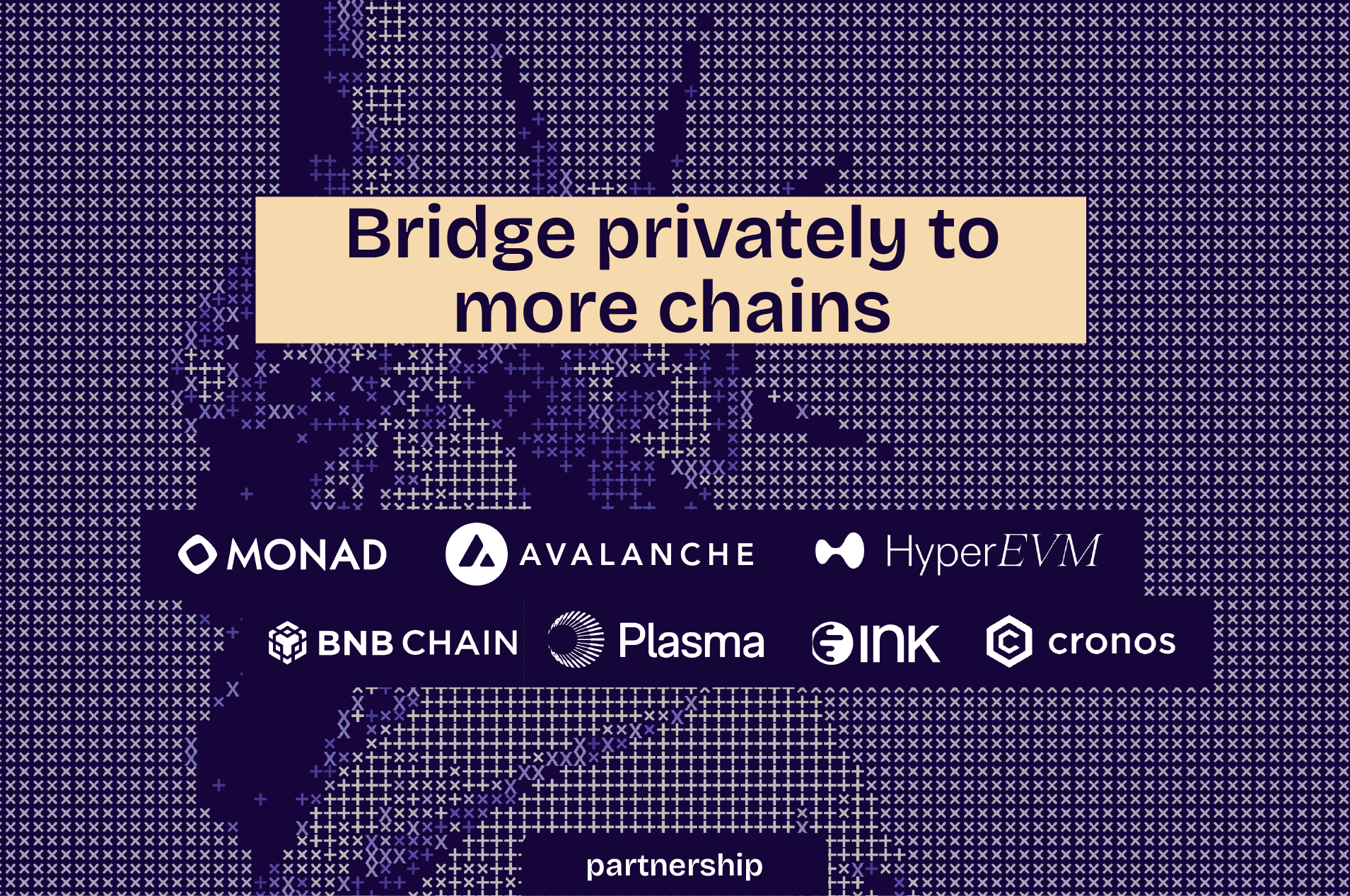
Hinkal delivers production-ready confidential settlement across Ethereum, Solana, Tron, Polygon, Base, Arbitrum, and Optimism. The platform has processed over $400M in volume with multiple independent security audits.
What sets Hinkal apart for PSPs:
- Zero recipient setup: Merchants connect their existing wallet to access confidential balances: no migration, no new wallet, no integration required on the recipient side
- Multi-chain coverage: Operates across multiple chains without requiring PSPs to build separate infrastructure for each network
- Built-in compliance: Chainalysis KYT integration blocks flagged wallets at the deposit stage; viewing keys enable selective disclosure to auditors and regulators
The Hinkal SDK enables PSPs to integrate confidential settlement into existing workflows within one to two weeks. Developers install the package via npm and replace standard transfer calls with confidential transfer methods.
Best for: PSPs requiring multi-chain confidential settlement with zero recipient friction and institutional-grade compliance controls.
How Hinkal Works for PSP Settlement
The settlement flow preserves operational simplicity:
- PSP routes settlement funds through Hinkal's smart contract
- Funds enter a confidential balance linked to the merchant's existing wallet
- Merchant connects their wallet at Hinkal Pay and sees the confidential balance immediately
- Merchant executes payouts without public linkage to the PSP wallet
This "one button, frictionless flow" eliminates the adoption barrier that other solutions create. PSPs settling with hundreds or thousands of merchants cannot require each recipient to install specialized wallets or complete technical onboarding.
Institutional use cases extend beyond merchant settlement to include OTC desk settlements, payroll operations, and treasury management: all using the same underlying technology.
2. Canton Network
Canton Network takes a different approach by building privacy into the blockchain architecture itself rather than adding confidentiality to existing public chains.
Key Features:
- Super Validator governance model: Trusted financial institutions provide network security
- Configurable privacy settings: Adjustable confidentiality controls designed for regulated finance
- Built-in audit trails: Native compliance features for institutional requirements
- Daml-based programmable privacy: Canton’s architecture uses Daml and the Global Synchronizer to let applications define privacy, permissions, and governance while participating in a broader public permissioned network
- Canton ecosystem participation: Operates within dedicated network environment
Canton Network focuses on financial institutions building privacy-first blockchain infrastructure for capital markets and institutional treasury operations.
3. Railgun
Railgun has operated since 2021 and provides privacy features for Ethereum ecosystem users. The platform uses Groth16 zkSNARKs to shield transaction details and supports interactions with DeFi protocols through its Railway DEX.
Key Features:
- Established track record: Operating in the Ethereum ecosystem since 2021
- Private Proofs system: Compliance verification capabilities
- DeFi protocol integration: Connections with protocols like Uniswap and Aave
- 0zk address system: Specialized address format for private transactions
- Ethereum-focused architecture: Built primarily for Ethereum ecosystem
Railgun serves Ethereum DeFi-focused organizations with technically sophisticated users who can manage specialized wallet addresses.
4. Privacy Pools
Privacy Pools represents an academic approach to compliance-forward confidentiality, backed by research from prominent blockchain researchers. The system uses Association Sets and zero-knowledge proofs to enable privacy while maintaining compliance capabilities.
Key Features:
- Association Set Providers: ASPs define inclusion criteria for pool membership
- Ragequit mechanism: Allows users to exit pools
- Academic foundation: Published research backing the approach
- Zero-knowledge proofs: Cryptographic privacy guarantees
- Ethereum mainnet: Currently operates on Ethereum
Privacy Pools operates at an early adoption stage with a focus on research-driven compliance models.
5. Chainlink Confidential Compute
Chainlink Confidential Compute uses Trusted Execution Environments (TEEs) to enable privacy-preserving smart contract operations. The approach leverages hardware-level isolation (Intel SGX, AMD SEV) rather than zero-knowledge cryptography.
Key Features:
- TEE-based confidential computing: Hardware-level security with Intel SGX and AMD SEV
- Threshold encryption: Distributed security preventing single point of failure
- Decentralized verification: Oracle network provides distributed validation
- Chainlink infrastructure integration: Works with existing Chainlink services
- LINK token utilization: Requires LINK for oracle services
Chainlink Confidential Compute serves organizations using Chainlink infrastructure seeking to add confidential computing capabilities to existing oracle integrations.
Choosing the Right Confidential Payment Rails
The decision framework for PSPs depends on three primary factors: chain requirements, recipient friction tolerance, and compliance needs.
Comparison Overview
Multi-chain support:
- Hinkal: Multiple chains supported (Ethereum, Solana, Tron, Polygon, Base, Arbitrum, Optimism)
- Canton Network: Canton ecosystem only
- Railgun: 4 chains supported
- Privacy Pools: Ethereum only
- Chainlink: Multiple chains supported
Recipient setup:
- Hinkal: None required
- Canton Network: Canton ecosystem participation
- Railgun: 0zk address needed
- Privacy Pools: Pool membership required
- Chainlink: Varies by implementation
Production status:
- Hinkal: $400M+ volume processed
- Canton Network: Live
- Railgun: Operating since 2021
- Privacy Pools: Early adoption stage
- Chainlink: Announced privacy infrastructure, with availability depending on Chainlink product access and implementation path
Built-in KYT:
- Hinkal: Chainalysis integration
- Canton Network: Institutional compliance
- Railgun: Private Proofs system
- Privacy Pools: ASP model
- Chainlink: Varies by implementation
Setup timeline:
- Hinkal: Same day to 2 weeks
- Canton Network: Multi-week process
- Railgun: Hours to days
- Privacy Pools: Days to weeks
- Chainlink: Varies by implementation
Beyond Basic Privacy: Compliance-Ready Confidentiality
PSPs operating in regulated environments cannot adopt purely private solutions that lack audit capabilities. Compliance-ready confidential solutions differentiate from systems designed to evade oversight.
Selective Disclosure via Viewing Keys
Viewing keys enable PSPs to reveal full or partial transaction history to authorized parties:
- Auditors reviewing settlement patterns for compliance checks
- Regulators examining specific transactions during investigations
- Internal compliance teams monitoring settlement activity
- Exchange partners requiring transaction verification
This capability addresses the "privacy equals evasion" misconception. Confidential transactions remain auditable when necessary: the PSP controls disclosure rather than having all transactions permanently public.
KYT Enforcement at the Protocol Level
Zero-knowledge proof systems can integrate with Know Your Transaction screening to block flagged wallets before funds enter confidential pools. This prevents tainted funds from contaminating compliant operations.
For PSPs, this means:
- Sanctioned addresses (OFAC, etc.) blocked at deposit
- Compliance burden reduced through automated screening
- Clean pools maintained without manual intervention
Implementation Roadmap for PSPs
Payment operations best practices emphasize phased implementation to minimize operational risk.
Phase 1: Preparation (Week 1-2)
- Audit existing settlement workflows and identify high-value confidential use cases
- Install SDK in development environment (npm install)
- Create recipient education materials explaining confidential balance access
- Configure supported chains based on current settlement volume
Phase 2: Testing (Week 2-4)
- Execute test transactions on current testnets, such as Ethereum Sepolia and Polygon Amoy
- Verify gas cost estimates across each chain
- Test recipient wallet connection flow with internal stakeholders
- Validate viewing key access for compliance team members
Phase 3: Pilot Migration (Week 4-6)
- Select 10-20 low-volume merchants for initial confidential settlements
- Monitor transaction success rates and recipient feedback
- Document issues and refine processes before broader rollout
- Measure gas costs against estimates
Phase 4: Production Rollout (Week 6-8)
- Expand to full merchant base in phases
- Provide tiered support based on settlement volume
- Monitor transaction patterns and error rates
- Communicate competitive advantages to merchant partners
Protecting Sensitive Financial Data from Competitors
The strategic value of confidential settlement extends beyond operational privacy. PSPs gain competitive protection when settlement patterns remain shielded from market observation.
Risks mitigated by confidential payment rails:
- Competitors mapping your merchant base through settlement analysis
- Market observers inferring pricing strategies from volume patterns
- Counterparties gaining negotiating leverage from visible transaction history
- On-chain data being used against you in audits or negotiations
Confidential computing in Web3 addresses the fundamental tension between blockchain transparency and business confidentiality. PSPs can maintain the efficiency of on-chain settlement while protecting the commercial intelligence that public transactions would expose.
Why Hinkal is The Best Alternative for Confidential Payment Rails
Hinkal stands out among confidential payment solutions through its unique combination of multi-chain support, zero recipient friction, and institutional-grade compliance features. Where other solutions require recipients to adopt new wallets, join specific ecosystems, or complete technical onboarding, Hinkal enables merchants to access confidential balances using their existing wallets.
Key advantages that differentiate Hinkal:
Zero-friction settlement: Recipients connect their existing wallet at Hinkal Pay and immediately access confidential balances without migration, new wallet installation, or technical integration. This eliminates the adoption barrier that prevents scalable PSP deployment.
True multi-chain coverage: Operating across Ethereum, Solana, Tron, Polygon, Base, Arbitrum, and Optimism without requiring separate infrastructure for each network. PSPs maintain unified confidential settlement strategy across all major chains.
Built-in compliance architecture: Chainalysis KYT integration blocks flagged wallets at the smart contract level. Viewing keys enable selective disclosure to auditors and regulators. This compliance-ready approach differentiates Hinkal from purely private systems.
Production-proven infrastructure: Over $400M in confidential volume processed with multiple independent security audits. This operational track record provides confidence for enterprise PSP deployment.
Rapid integration timeline: The Hinkal SDK enables same-day to two-week implementation without changing existing custody arrangements or wallet infrastructure. PSPs can deploy confidential settlement without operational disruption.
For Payment Service Providers requiring confidential settlement at scale, Hinkal delivers the operational simplicity, compliance readiness, and multi-chain coverage that enterprise deployment demands.






















































.png)
.png)











.webp)