In June 2026, adjusted stablecoin transaction volume reached a record $1.79 trillion, up 125% from a year earlier, according to Visa's onchain dashboard as reported by CoinDesk.
Every one of those transfers settled on a public ledger where wallets, amounts, and counterparties are visible by default.
Hinkal provides privacy infrastructure for stablecoin payments and on-chain financial operations, letting businesses move funds across public blockchains while keeping payment, settlement, payout, and treasury data confidential, without changing existing wallets, chains, custody, or compliance controls.
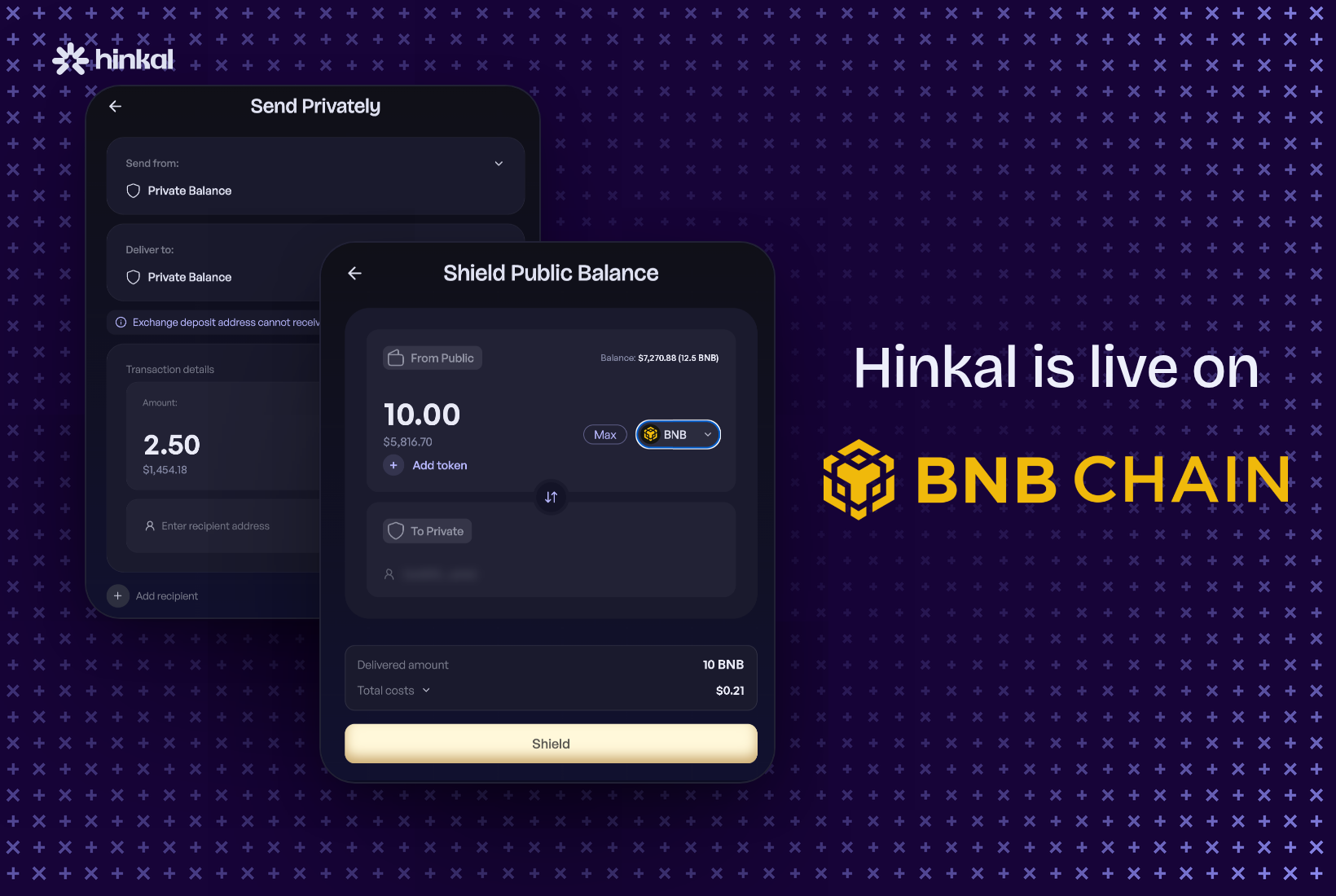
The two actions that make this possible are shielding, which moves funds from a public wallet into a private balance, and unshielding, which moves them back out to any public address.
This guide walks through exactly how to shield and unshield crypto assets with Hinkal, step by step, and how to embed the same private balance and private send into wallets you already operate through Hinkal API and Hinkal SDK.
[[KEY_TAKEAWAYS]]
What Shielding and Unshielding Actually Mean
A private balance, sometimes called a shielded balance, is a confidential balance held inside Hinkal's smart contract on the same public chain you already use. It is controlled through your existing wallet keys, and it is verifiable and valid on-chain without revealing who owns it, how much it holds, or which token.
Shielding is the act of moving funds into that private balance. Unshielding is the act of moving them back out to a public address. Between those two actions, you can transact privately as often as you want, with sender, recipient, and amount hidden from the public ledger.
Three properties make this different from a mixer or a separate privacy chain:
No migration: You keep your existing chains, wallets, and stablecoins. Nothing has to be replaced, and no new network is involved.
Non-custodial: Hinkal never holds your funds. The private balance is controlled by the same keys you already use to sign transactions. There are no Hinkal-issued passwords or credentials.
Verifiable privacy: Through zero-knowledge proofs (zkSNARKs, Groth16), every transaction is proven valid on the public chain while participants and amounts stay private.
The Four Payment Flows at a Glance
Before the step-by-step walkthroughs, here is the full map. Shielding and unshielding are two of the four flows Hinkal Pay supports, and together they cover every combination of public and private.
Flow
From
To
What stays private
Public to Private (shield)
Wallet balance
Confidential balance
Future activity from the balance
Private to Private
Confidential balance
Confidential balance
Sender, recipient, asset, and amount
Private to Public (unshield)
Confidential balance
Public wallet
The sender
Public to Public
Wallet balance
Public wallet
The sender-to-recipient link
The sections that follow walk through these flows in the order you would actually use them: first shield funds in, then transact privately, then unshield out.
The Public to Public flow is a shortcut where funds start and end at public wallets, but the deposit and withdrawal are unlinkable, so the direct connection between sender and recipient is removed on-chain, with no shielded-address experience required on either side.
Before You Start: Prerequisites
You need three things to shield and unshield with Hinkal:
A wallet you already control on a supported chain. Hinkal works across Ethereum, Polygon, Arbitrum, Optimism, Base, Solana, TRON, Arc, and Tempo, covering EVM networks plus Solana and TRON, with cross-chain movement available while preserving privacy.
A supported stablecoin or asset in that wallet.
Nothing else. There is no separate account to create, no custodial onboarding, and no change to your compliance setup.
Compliance screening runs automatically. Chainalysis KYT screens the wallet address before execution to prevent high-risk funds from entering the smart contract, so you do not have to run this step yourself.
How to Shield, Transact, and Unshield with Hinkal: Step by Step
The complete lifecycle runs in three steps. First shield funds into a private balance, then transact privately (optional), then unshield back out to any public address. Each step is signed by your existing wallet keys, and Hinkal never takes custody at any point.
Step 1: Shield Crypto Assets (Public to Private)
Shielding takes funds sitting in your public wallet and moves them into a private balance. Here is the full flow.
Connect your wallet: Connect any supported wallet to Hinkal Pay. Your keys stay in your custody, and the wallet you connect becomes the credential that controls your private balance.
Select the asset, chain, and amount: Choose the stablecoin or token you want to shield, confirm the chain, and enter the amount you want to move from public to private.
Automatic KYT screening: Before the deposit executes, Chainalysis KYT screens the wallet address. This happens in the background and blocks high-risk funds from entering the contract.
Approve and confirm the deposit: Sign the transaction with your existing wallet keys, the same keys you already use. Hinkal builds the deposit as a zero-knowledge commitment (a UTXO-style commitment) rather than a direct wallet-to-wallet transfer.
Funds arrive as a private balance: The amount now sits inside the Hinkal smart contract as your confidential balance. Future activity from that balance is not publicly visible. On-chain, only the Hinkal smart contract and the relayer address appear.
At this point your funds are shielded. You can hold them privately, transact privately, or unshield them whenever you need.
Step 2: Transact Privately (Private to Private)
Once funds are shielded, you can send them to another private balance without ever touching a public address. This is the step most businesses use for confidential settlement, payroll, and vendor payouts.
Open your private balance inside Hinkal Pay or your integrated product.
Enter the recipient's private balance and the amount: Both sides operate from confidential balances.
Confirm: A relayer broadcasts the transaction, so your own wallet never appears as the transaction origin. On-chain, the transfer shows no sender wallet and no recipient wallet, only the Hinkal smart contract and the relayer address. No outside observer can determine who sent, who received, or how much.
This step is optional. If you only need to move funds in and back out, you can skip straight to unshielding.
Step 3: Unshield Crypto Assets (Private to Public)
Unshielding moves funds from your private balance back out to any public wallet. The recipient address becomes public, but you as the sender stay confidential.
Open your private balance: From Hinkal Pay or your integrated interface, view the shielded funds you want to withdraw.
Choose withdraw (unshield): Select the option to move funds from your confidential balance to a public address.
Enter the destination address and amount: Provide the public wallet that should receive the funds and the amount to unshield.
Proof generation in the secure enclave: Private balance reads, UTXO handling, proof generation, and transaction building run inside Hinkal's secure enclave. Raw key material is never exposed outside it.
The relayer broadcasts and funds land: The recipient receives funds at the public address, while the deposit into Hinkal and the withdrawal out of it stay cryptographically unlinkable. An observer sees a withdrawal, but cannot connect it back to your original deposit.
How to Add Shielding and Unshielding to Existing Wallets
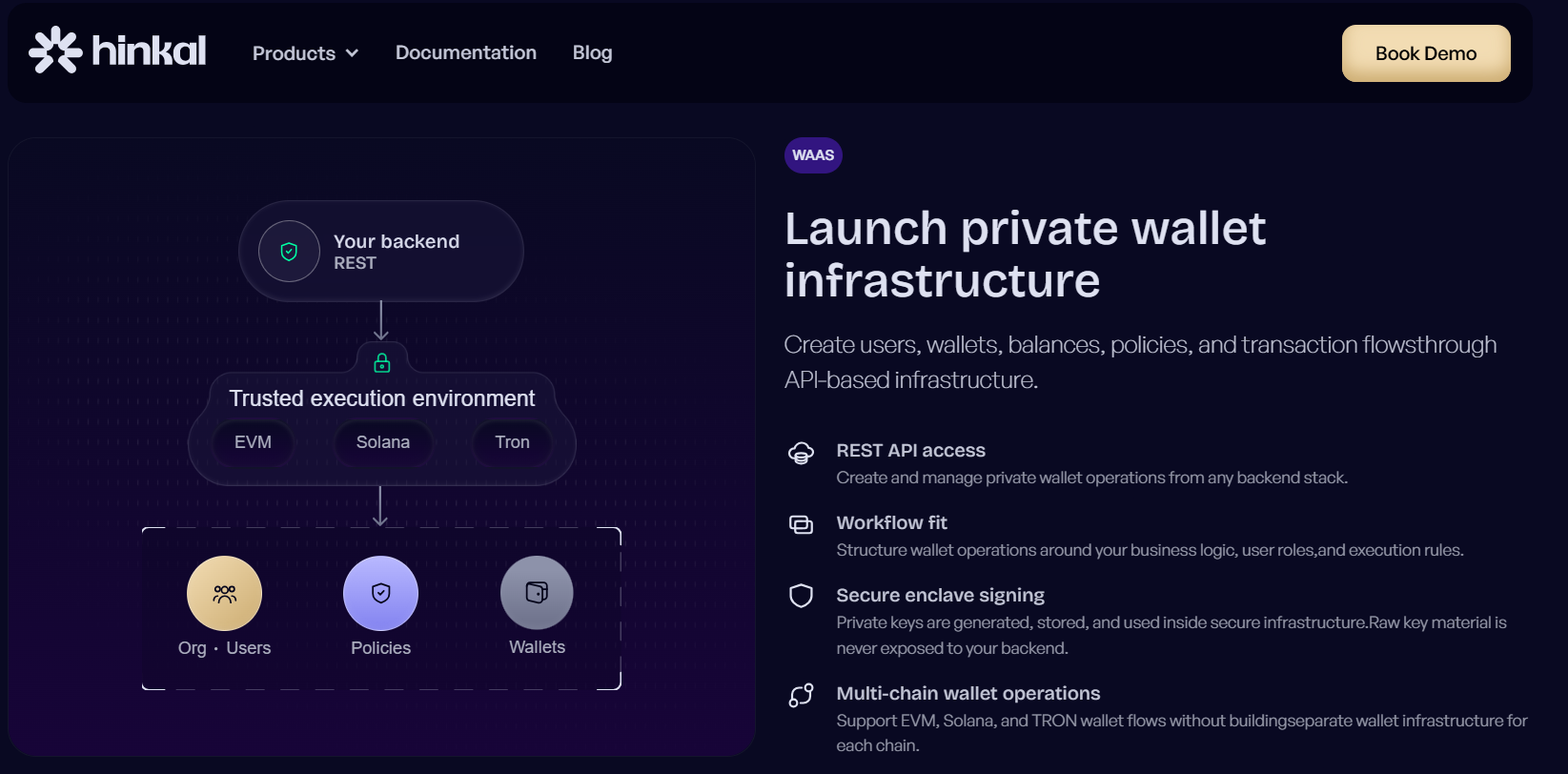
For most teams, the highest-value question is not only how to shield funds manually, but how to put a private balance and a private send directly inside a product users already use. That is what Hinkal Integrations, delivered through Hinkal API and Hinkal SDK, are built for.
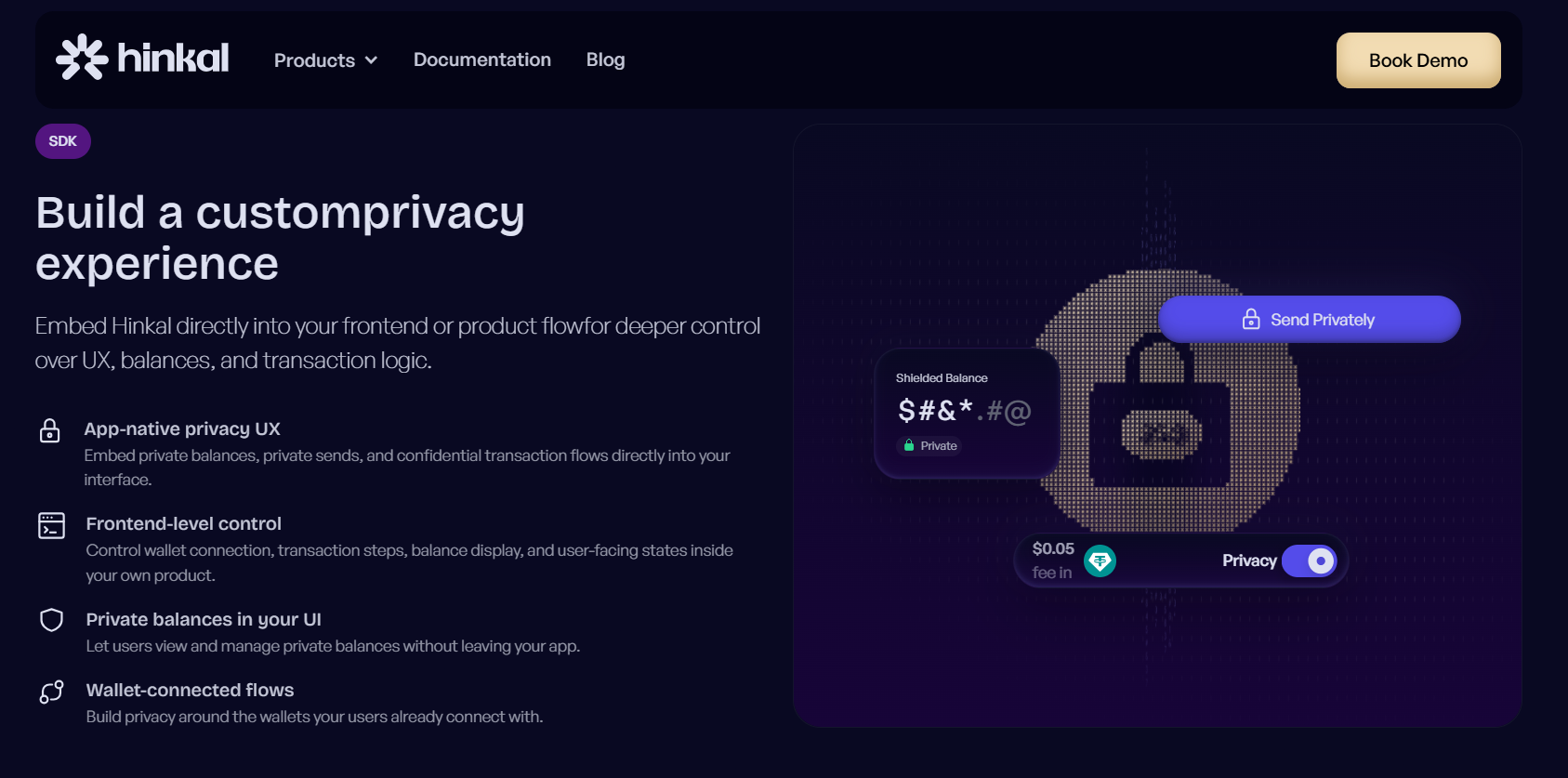
The goal is simple: next to the regular balance a user already sees, they also see a private balance, and next to the regular send, they see a private send. The existing product experience does not change. Privacy is added underneath it, on demand, per transaction.
Why it Fits Existing Wallet Infrastructure
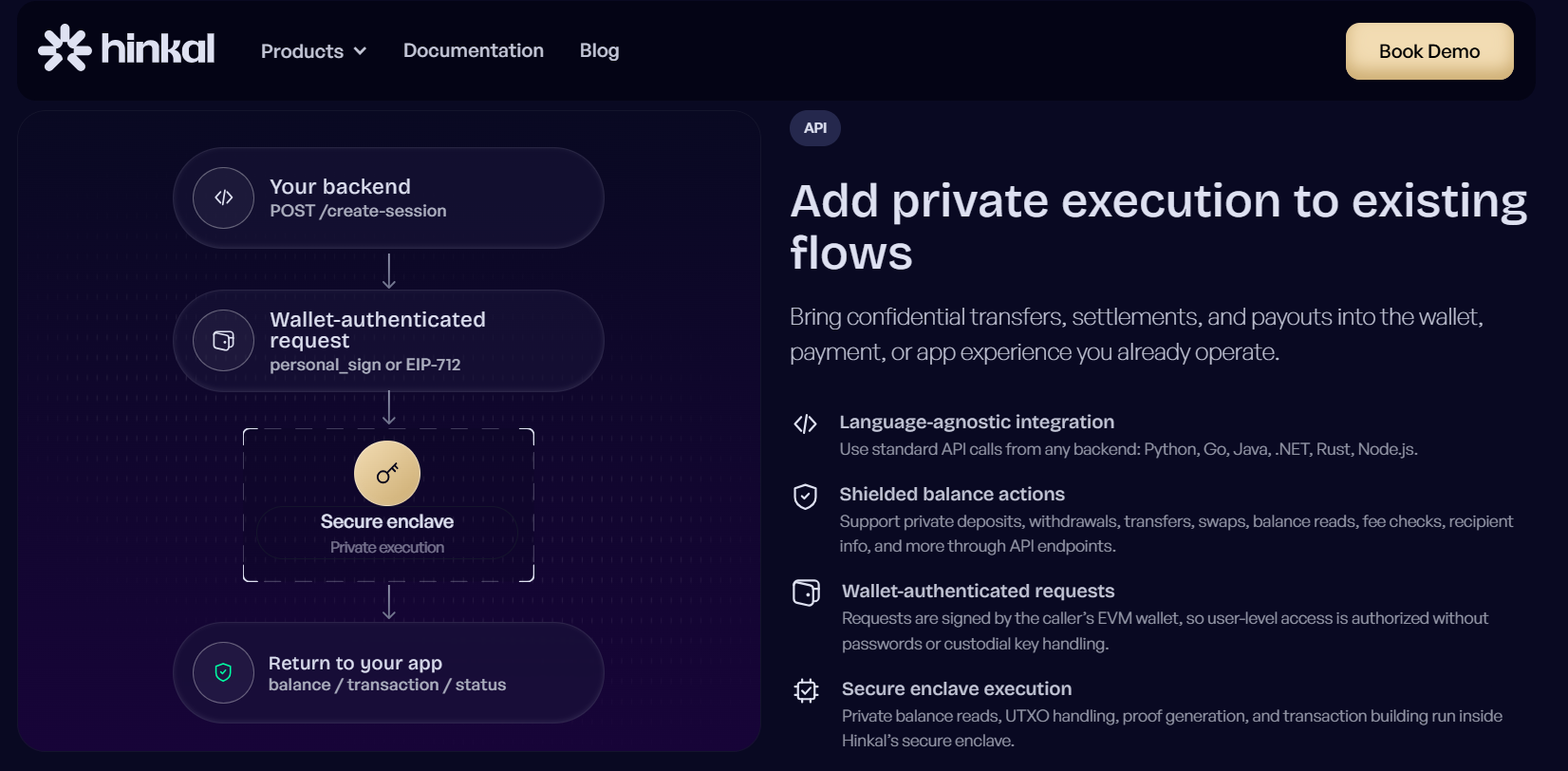
Hinkal is designed to sit alongside modern wallet infrastructure such as Turnkey, Privy, DFNS, and Dynamic, rather than replace it. The mechanism that makes this work is wallet-authenticated requests. Requests are signed by the caller's existing EVM wallet, so user-level access is authorized without passwords or custodial key handling.
Because these providers already produce standard EVM-signable wallets, Hinkal can authorize shielded actions using the same signature flow the wallet already performs.
Three properties keep the integration clean:
No custody change: Hinkal never takes possession of funds or keys. The wallet your users already connect with remains the credential.
No compliance change: Chainalysis KYT screening and viewing keys operate the same way they do in Hinkal Pay, so your existing controls stay intact.
No experience change: You control wallet connection, transaction steps, balance display, and user-facing states inside your own product.
Integrating with Hinkal API
Hinkal API is the drop-in surface for adding private execution to an existing stack. It is language-agnostic, so you can call it from Python, Go, Java, .NET, Rust, or Node.js. Through standard API endpoints, you get shielded balance actions: private deposits (shielding), withdrawals (unshielding), transfers, swaps, balance reads, fee checks, and recipient information.
Private balance reads, UTXO handling, proof generation, and transaction building all run inside Hinkal's secure enclave. A forward-deployed Hinkal engineer assists throughout the integration.
A typical API integration for a wallet provider looks like this:
Authenticate the request with the user's existing EVM wallet signature.
Call the deposit endpoint to shield funds from the user's public balance into their private balance.
Call transfer endpoints for private-to-private movement, or the withdrawal endpoint to unshield to a public address.
Read the private balance through the balance endpoint to display it next to the regular balance in your interface.
Integrating with Hinkal SDK
Hinkal SDK is for teams that want deeper control over the user experience. It gives programmatic access to Hinkal's shielded pool, including deposits, transfers, withdrawals, swaps, private DeFi, and viewing-key management, with direct on-chain interaction.
You control wallet connection, transaction steps, balance display, and user-facing states inside your own frontend, so users can view and manage private balances without leaving your app. Two teams are integrating the SDK in production today, and forward-deployed engineering support is available throughout.
The practical result for a Turnkey, Privy, DFNS, or Dynamic-based product is that shielding and unshielding become native features of your wallet, built around the wallets your users already connect with, with no separate operator and no new infrastructure to run.
Keeping It Compliant and Auditable
Privacy with Hinkal means opacity to the public ledger, not opacity to your compliance team or auditor. Three controls keep shielded activity accountable:
Chainalysis KYT screens wallet addresses before every transaction to prevent high-risk funds from entering the smart contract.
Viewing keys let you decrypt your own transaction history and share it selectively. Disclosure can be full or partial, scoped to specific transactions or time ranges, for auditors, regulators, or counterparties, without exposing anything on the public ledger.
Downloadable transaction history is ready to hand to a third party out of the box.
This is the structural difference from compliance-free obfuscation tools. Compliance is embedded at the entry point, and disclosure stays under your control.
Conclusion
Hinkal is the privacy layer that adds confidential settlement to the public chains you already operate on, without asking you to change wallets, chains, stablecoins, or compliance controls.
Shielding funds into a private balance and unshielding them back to any public address takes only a few signed steps, and the same capability can be embedded directly into wallets and products through Hinkal API and Hinkal SDK, so private balances and private sends sit right next to the regular ones your users already know.
If you want to add confidential settlement to your product or run private treasury and payouts at scale, book a demo with the Hinkal team to see shielding and unshielding in your own stack.
1. What does it mean to shield crypto assets with Hinkal?
To shield crypto assets with Hinkal means moving funds from your public wallet into a private balance held inside Hinkal's smart contract on the same chain. The balance is controlled by your existing wallet keys and stays confidential on the public ledger, while remaining verifiable through zero-knowledge proofs.
2. How do you unshield crypto assets with Hinkal?
You unshield crypto assets with Hinkal by opening your private balance, choosing withdraw, and entering a public destination address and amount. Hinkal generates the proof inside its secure enclave and a relayer broadcasts the transaction, so funds reach the recipient while you as the sender stay confidential.
3. Is shielding assets with Hinkal non-custodial?
Yes, shielding assets with Hinkal is non-custodial. Hinkal never holds your funds or keys, and the private balance is controlled by the same wallet keys you already use to sign transactions, with no Hinkal-issued passwords or credentials.
4. Can you add Hinkal shielding to an existing wallet like Turnkey or Privy?
Yes, you can add Hinkal shielding to an existing wallet like Turnkey or Privy through Hinkal API and Hinkal SDK. Requests are signed by the user's existing EVM wallet, so private balances and private sends can be embedded alongside the regular ones without changing custody, compliance, or the product experience.
5. Which chains support shielding and unshielding with Hinkal?
The chains that support shielding and unshielding with Hinkal are Ethereum, Polygon, Arbitrum, Optimism, Base, Solana, TRON, Arc, and Tempo, covering EVM networks plus Solana and TRON, with cross-chain movement available while preserving privacy.
FAQ
Common questions
Do I need a new wallet to use Hinkal Wallet?
No. You can import your existing wallet using a seed phrase and access your assets immediately.
Do I need a new wallet to use Hinkal Wallet?
No. You can import your existing wallet using a seed phrase and access your assets immediately.
Do I need a new wallet to use Hinkal Wallet?
No. You can import your existing wallet using a seed phrase and access your assets immediately.
Trusted by teams building on public chains
Key Takeaways
Shielding moves funds from a public wallet into a private, wallet-controlled balance.
Unshielding moves funds from a private balance back to any public address.
Your existing wallet keys sign every action, and Hinkal never holds your funds.
Every transaction is ZK-verified and Chainalysis KYT-screened before it settles.
Hinkal API and Hinkal SDK add private balances to wallets you already run.
Want
to
stay
ahead
of
the
market?
Get exclusive insights on privacy, stablecoins, and marketdevelopments shaping enterprise on-chain finance.
Thank you! Your submission has been received!
Oops! Something went wrong while submitting the form.
Related Articles
August 10, 2026
Hinkal can now be integrated directly into Go backends
Announcement
August 6, 2026
Episode 04: Stealth Addresses
Opinion
August 4, 2026
Hinkal Pay is now live on BNB Chain
Announcement
July 31, 2026
Hinkal can now be integrated directly into iOS and Android
Announcement
July 29, 2026
Hinkal MCP: Private Payments from Any AI Client
Announcement
July 27, 2026
Private Balances and Transfers Are Live on Privy Wallets
Announcement
July 24, 2026
The On-Chain Treasury Exposure Report: What Public Corporate Wallets Reveal
Opinion
July 23, 2026
The Hidden Cost of Public Crypto Payroll: A 2026 Exposure Report
Opinion
July 23, 2026
Hinkal is Live on Openfort
Announcement
July 22, 2026
Confidential Stablecoin Settlement Under MiCA, the Travel Rule, and GENIUS: 2026 Readiness Report
Analysis
July 21, 2026
Confidential Settlement for Stablecoin Issuers: How Issuers Keep Vault Positions and Holder Balances Private
Opinion
July 20, 2026
Reading the Tape: How Counterparties Reverse-Engineer an OTC Desk's Book From On-Chain Settlement
Opinion
July 20, 2026
Introducing the New Hinkal Pay: New Look and Features
Announcement
July 17, 2026
Embedded Wallet Integration Guide: Private Balances via the Hinkal SDK (Privy / Turnkey / Crossmint)
Analysis
July 16, 2026
How to Pay Vendors in Stablecoins Without Exposing Your Treasury Balance
Analysis
July 15, 2026
Best Private Settlement Infrastructure for Solana Businesses
Analysis
July 14, 2026
The Migration Tax: What It Costs a Treasury to Move to a Privacy Chain vs Add Privacy on Ethereum
Opinion
July 13, 2026
Confidential Settlement for Regulated Treasuries
Opinion
July 10, 2026
How RWA Protocols Can Protect Investor Activity Onchain
Analysis
July 9, 2026
Association Sets vs Selective Disclosure: Which Privacy Model Passes a Compliance Review?
Analysis
July 8, 2026
Best Privacy Infrastructure for Tokenized Asset Platforms
Analysis
July 6, 2026
Best Railgun Alternatives for Private Stablecoin Treasury Management (2026)
Analysis
July 6, 2026
Best Crypto Payment API for Fintechs With Private Settlements (2026)
Analysis
July 6, 2026
Privacy vs Compliance: Which Crypto Privacy Solutions Work for Businesses?
Opinion
July 6, 2026
How DAOs Can Pay Contributors Without Revealing Compensation Data
Opinion
July 2, 2026
Privacy is live on Turnkey wallets, powered by Hinkal
Partnership
June 29, 2026
Best Privacy Infrastructure for Institutional DeFi Platforms in 2026
Opinion
June 26, 2026
Private settlements & payouts are coming to AllScale
Partnership
June 18, 2026
Private Stablecoin Custody Is Coming to The Vault
Partnership
June 17, 2026
Episode 03: UTXO Model, Commitments & Nullifiers
Opinion
June 16, 2026
Both-Way Bridging Across EVM, Solana, and TRON Is Live
Announcement
June 15, 2026
Private Swaps and Payments - Now Live on Tempo
Announcement
June 12, 2026
Bridge from Hinkal to External Chains with LI.FI
Partnership
June 10, 2026
Hinkal API: Drop-In Privacy For Every Product Where Serious Capital Flows
Announcement
June 10, 2026
Hinkal x Peso: Private Stablecoin Payments for LATAM
Announcement
June 9, 2026
Hinkal vs Zama vs Canton: Enterprise Privacy Infra Compared
























































.png)
.png)









.webp)